
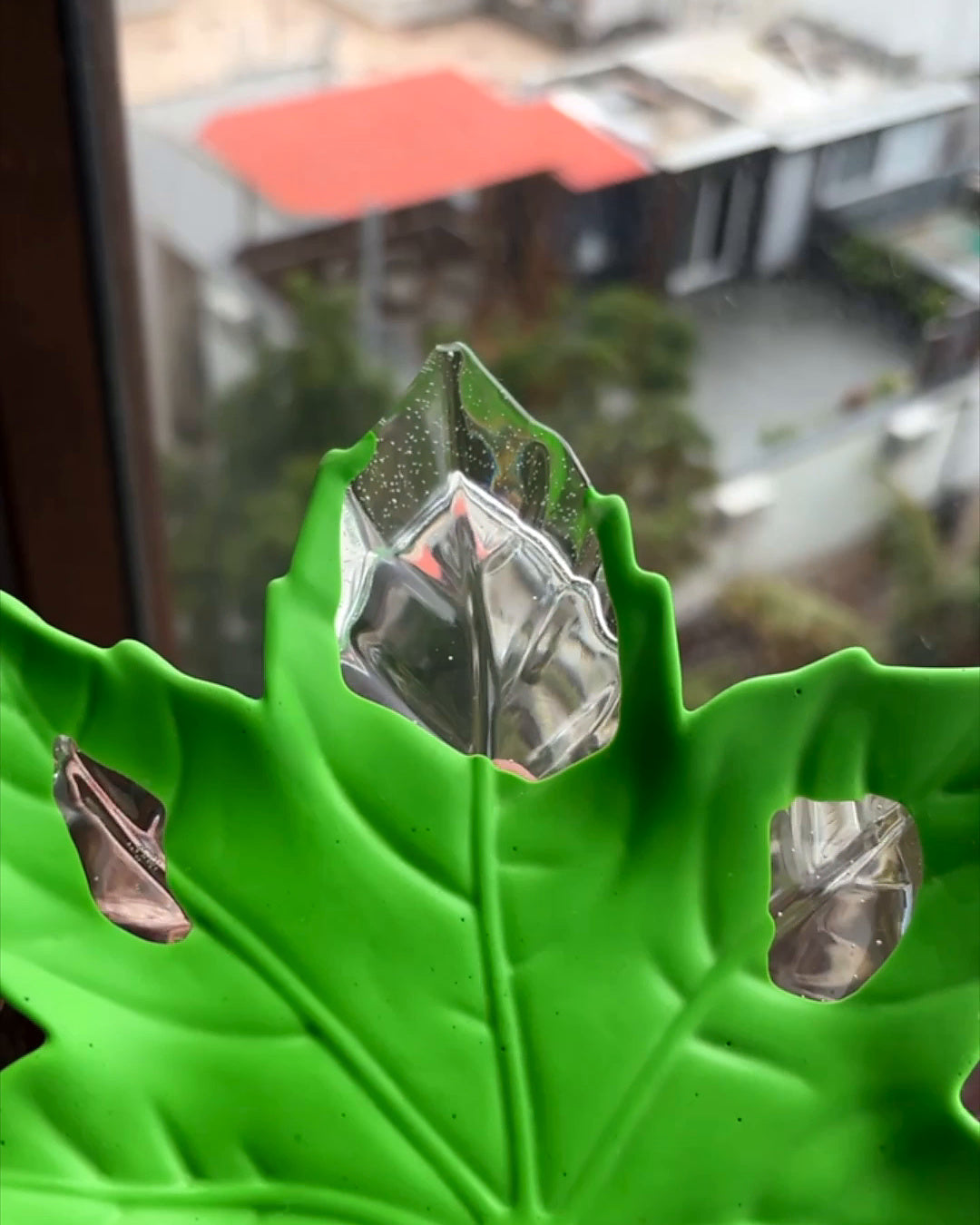
Yes — absolutely.
Jesmonite® and epoxy resin are very different materials, but that doesn't mean they cannot be used together in the same design.
In fact, combining the solid, stone-like finish of Jesmonite with transparent epoxy resin can create effects that aren't possible with either material on its own.
For this experiment, we used both materials inside the same silicone mould to create a leaf-shaped piece with transparent resin sections running through the Jesmonite.

What You'll Need
-
Jesmonite® AC100
-
Jesmonite® pigments
-
Clear epoxy resin
-
Silicone mould
-
Digital weighing scale
-
Mixing cups
-
Mixing sticks
-
Gloves
For this piece, we used a bright green Jesmonite base and clear epoxy resin to make the contrast between the two materials particularly visible.
Step 1: Prepare Your Jesmonite
Measure and mix your Jesmonite according to its recommended mixing ratio.
Add your chosen Jesmonite pigment.

Mix thoroughly until the colour is completely uniform.

Step 2: Pour the Jesmonite Into the Mould
Pour the coloured Jesmonite into the areas of the mould that you want to remain opaque.
For this leaf design, Jesmonite forms the majority of the body while selected sections are deliberately left empty for resin.

The important part is to design the two materials as separate pours.
You are not mixing epoxy resin and Jesmonite together in the same cup. Instead, each material occupies a different part of the final casting.
Step 3: Let the Jesmonite Set
Allow the Jesmonite section to set sufficiently before introducing the epoxy resin.
This helps keep the two materials where you intended them and creates a much cleaner transition between the opaque Jesmonite and transparent resin.
There is no need to rush this stage.
Step 4: Add Clear Epoxy Resin
Prepare your clear epoxy resin according to its specified resin-to-hardener ratio.
Slowly pour the resin into the sections that were left empty.

Pour carefully around the Jesmonite edges to reduce unnecessary bubbles and overflowing.
The transparent resin now becomes part of the same object while retaining a completely different visual character from the Jesmonite.
Step 5: Allow Everything to Cure
Once the resin has been poured, leave the mould undisturbed until the epoxy has fully cured.
The resin must be properly cured before demoulding, even though the Jesmonite portion may be ready much earlier.
Step 6: Demould
Once everything has cured, gently remove the entire piece from the silicone mould.

Both materials should now come out together as one finished design.
The Result
You get the solid colour and sculptural detail of Jesmonite combined with sections of completely transparent epoxy resin.

It's an interesting technique for experimenting with:
-
Trays
-
Coasters
-
Decorative objects
-
Jewellery dishes
-
Art pieces
-
Terrazzo-style designs
-
Designs incorporating transparent windows or details
So, Do Resin and Jesmonite Work Together?
Yes — but the distinction is important.
Don't mix liquid epoxy resin directly into Jesmonite.
Instead, think of them as two separate casting materials being used strategically within the same object.
Jesmonite gives you colour, texture and a stone-like appearance, while epoxy gives you transparency, depth and gloss.
Combining the two opens up a completely different design language.

Leave a comment
This site is protected by hCaptcha and the hCaptcha Privacy Policy and Terms of Service apply.